
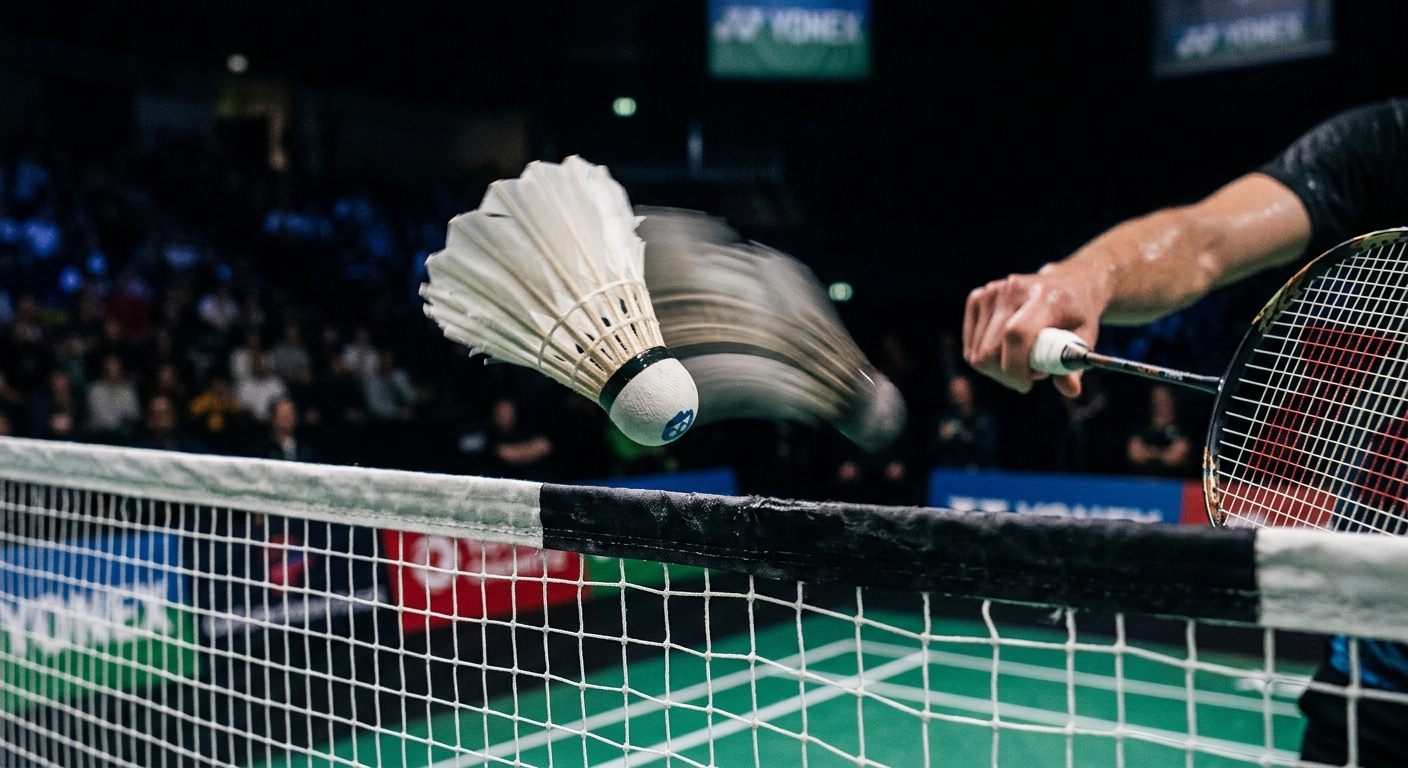
Professional badminton prioritizes deception and strategic serving over raw power to exploit limited reaction times. Techniques like the controversial spin serve create unpredictable flight paths that can decide points within the first few shots. Emphasizing short serves and precise footwork allows players to gain a psychological advantage during competitive matches.
Badminton is often dismissed as a “backyard hobby,” but at the professional level, it is the fastest racket sport on the planet. A shuttlecock can travel at speeds exceeding 400 km/h, leaving players with less than a fraction of a second to react. However, the real game isn’t won with power—it’s won with deception.
Recently, a controversial serving technique has sparked heated debate in the BWF (Badminton World Federation). It’s called the “Spin Serve” (or the Sidek-style serve variant). By flicking the feathers of the shuttlecock during the release, players create an unpredictable, wobbling flight path that makes it nearly impossible for the opponent to time their return. and it works
Despite BWF bans on certain serve variations, their psychological advantage remains undeniable. While amateurs overemphasize overhead smashes, most points are actually lost within the first three shots. To dominate the court, prioritize a deceptive start over raw power start.
Key Takeaways for Your Next Match:
- The Short Serve: Keeping the shuttle just millimeters above the net tape.
- Footwork over Power: Why “split-stepping” is more important than arm strength.
- The Mental Gap: Forcing your opponent to hesitate for just 0.1 seconds.
Leave a Reply